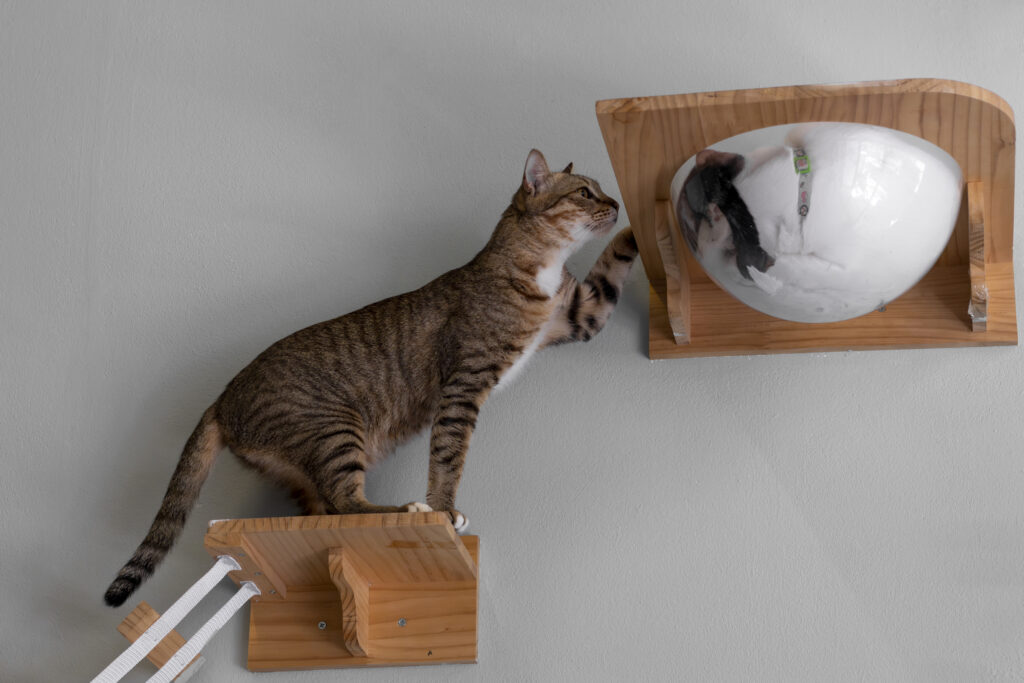
Indoor cats like to roam through the home, exploring and taking control of their environment. Climbing and perching are some of their favorite activities, which you can encourage with safe vertical movement paths. Planning these areas carefully will ensure your pets are happy and safe while enjoying enrichment in your home.
Key safety considerations
Cats usually climb with purpose and bravery. Most pet owners find it amazing just how high cats will climb and the type of terrain they’ll navigate to get to where they want to go. You should create vertical paths in your home that are secure and not too high up. You want your cat to feel like they are observing from above without being unsafe.
Keep pathways gradual. Don’t force your cat to take big leaps to the next spot, which could risk them falling. They should also have multiple escape routes and plenty of forward movement. Don’t leave them with dead ends that ruin the fun or confuse them.
Choosing your starting points
There needs to be a location where vertical paths will begin. These starting points should be easy to reach and access. Consider using a low shelf, window ledge, bench, or cat tree for this purpose. Avoid forcing your cat to make a big jump from ground level up to a high point. You should also prevent them from needing to balance themselves on an unstable item to start their adventure.
Stable surfaces for pathways
Feline safety largely depends on the type of surface they’re climbing and jumping onto. This ensures they don’t fall when they are maneuvering around corners or turns. Carpet is a great surface to use. Cats’ nails can cling to the material. Rubberized mats and posts with rope or twine around them are also great options. Avoid anything that is very smooth or glossy.
Securely mounting pathways
Cat shelves, paths, and perches need to be secure and anchored into the wall. While cats generally only weigh around 10 to 15 pounds, they produce a lot of force when they jump. You can use brackets and anchors into studs and upgrade your hardware with safety in mind.
Systems for multiple cats
If you have more than one cat in the home, your vertical pathway system should encourage use by all of them at one time. This means you’ll need multiple points where cats can perch and rest. Different routes can keep cats apart, which is especially helpful if they don’t get along.
Plan the perfect vertical paths for your indoor cats. Look through some of our pet ideas by following us on Facebook and Instagram. If you’re uncomfortable with the installation process, reach out to a professional in your area for guidance and installation support.