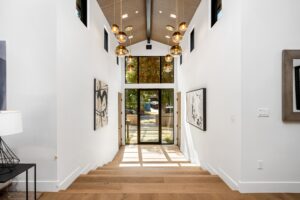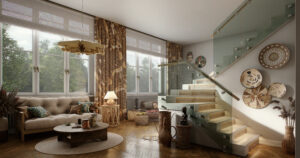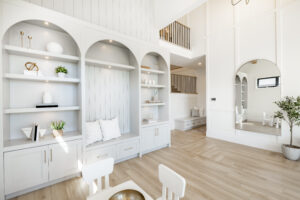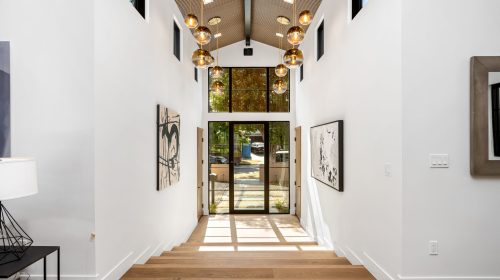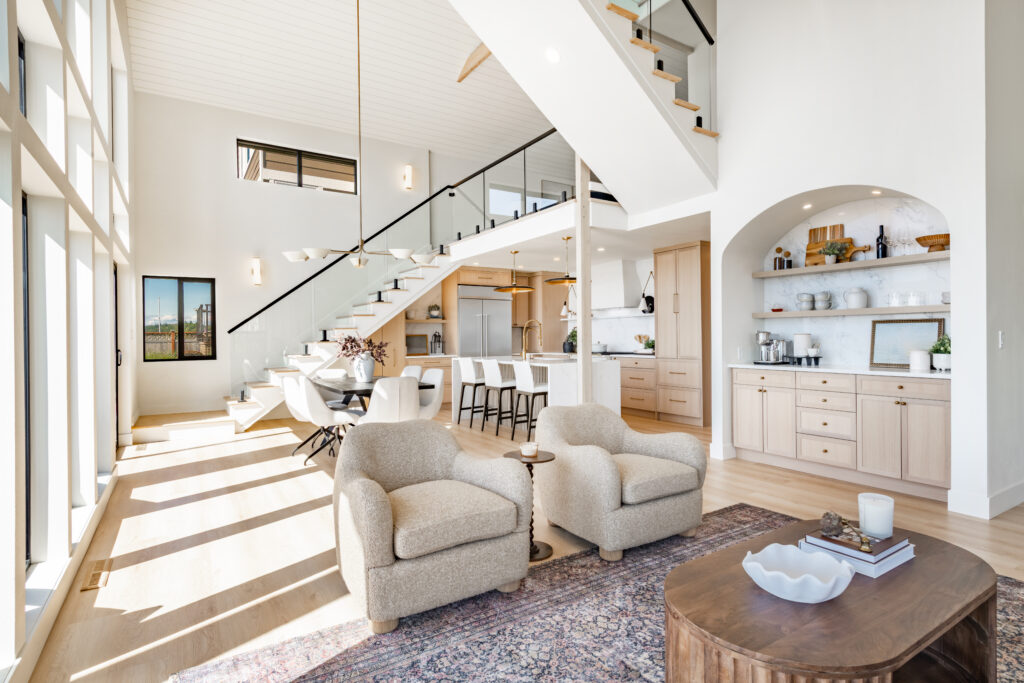
Design tips for improving visual flow between rooms can help your home feel more connected, balanced, and comfortable. When designing your home, it’s important to consider spatial flow, including the pathways and visual connections between rooms. When a home lacks visual flow, even well-designed spaces can feel disconnected or cluttered. With a few thoughtful design choices, you can create a more natural transition from one room to the next.
Create Connected Zones in Open-Concept Spaces
An open-concept layout can improve flow, but the lack of defined boundaries can sometimes make a large space feel overwhelming. Consider dividing the space into connected zones using lighting, area rugs, furniture placement, and window treatments.
For example, you can use rugs in similar colors for your dining area and kitchen while choosing slightly different shades, textures, or materials for each space. These subtle differences can define each zone without making the overall space feel visually cluttered.
Use a Consistent Color Palette
You can maintain consistency across adjoining spaces by sticking with a shared palette of three to five hues. Use light and dark variations of a particular color as you move from room to room. This approach adds visual interest while creating a smoother transition from one room to the next.
For example, you might use a deep blue in the dining room and introduce a softer version of that color in the living room. Repeat similar tones in walls, decor, and textiles, or use accent colors against a neutral base to connect the spaces.
Unify Spaces With Consistent Flooring
When moving between living spaces, similar flooring can create consistency and help guide the eye from one area to the next. You may want to use hardwood flooring throughout the living room, hallway, and dining area.
Area rugs and runners can then help define adjacent spaces and hallways while maintaining a visual connection. For instance, a long runner can emphasize the path between the living room and another part of the home.
Create Design Rhythm by Repeating Elements
Repeating design elements such as colors, shapes, patterns, and finishes can create visual harmony throughout your home. Repeating these details helps guide the eye through your home while creating a more cohesive look.
Consider coordinating hardware finishes, crown molding, trim, or other architectural details across different rooms. These small touches can help bring distinct spaces together without making every room look exactly the same.
Balance Furniture and Scale
When choosing furniture to place near transitions between rooms, consider curved shapes such as round console tables. These shapes can soften rigid lines, improve navigation, and create visual balance near room transitions.
Use furniture to bridge areas while still allowing for contrast. For example, a soft accent chair can complement the color palette of a nearby room while adding a different shape or texture.
It’s also important to choose furniture that is appropriately scaled for each room. Oversized pieces can make a space feel crowded, while furniture that is too small may make the room feel disconnected from the surrounding areas.
Keep Walking Paths Clear
Keeping pathways clear is another simple way to improve visual flow throughout your home. Place furniture and bulky items away from doorways and main walkways to create an unobstructed path between rooms.
Clear pathways reduce visual barriers and can make your home feel more open and organized. They also help traffic move naturally from one zone to the next.
Create Better Visual Flow Throughout Your Home
These design tips for improving visual flow between rooms can help you create a home that feels connected without making every space look identical. Coordinating colors, flooring, furniture, and design details can create subtle connections that make it easier for the eye to move naturally throughout your home.
When you’re ready to bring your ideas to life, TheHomeMag.com can help you connect with home improvement professionals in your area.
You can also follow TheHomeMag on Facebook or Instagram for more home design inspiration.