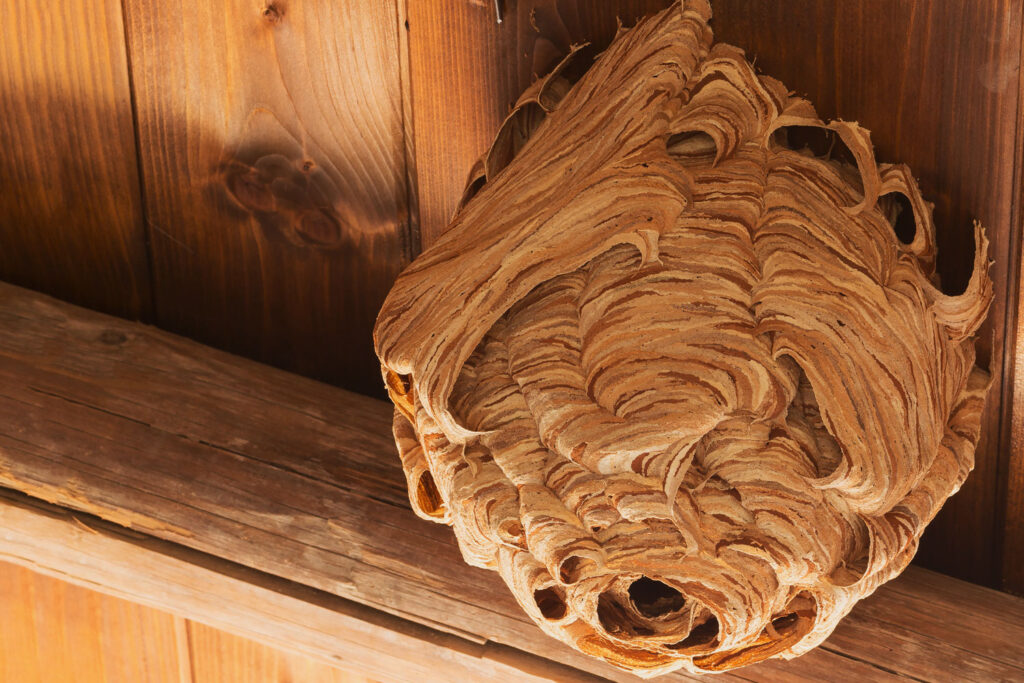
Bees and wasps are welcome guests as pollinators in your garden, but the invitation stops there. Having stinging insects in your home is a buzzkill, especially if someone who lives there is allergic to their venom.
How can you coexist with nature’s little winged helpers? Use natural methods and keep their homes a good distance away from yours. Here’s how.
Repel wasps with essential oils
The chemicals in wasp-repellent sprays aren’t always effective because they don’t eliminate lingering pheromones that attract more wasps. What’s worse, some of them are dangerous to use around people and pets.
Make a DIY repellent using essential oils. The scent of peppermint, lemongrass, and glove geranium are proven natural wasp repellents. Mix a few drops of the oil with water in a spray bottle and a little dish soap. Spray under eaves, porch roofs, crevices, and other likely nest-building sites. Wasps tend to rebuild in the same places each year, so coat those areas well.
Lure them into traps
Wasps and carpenter bees chew up wood to use as building material. Protect the wood on your decking by setting traps. It’s a method that has long been used and is effective and inexpensive. They work by luring the insects with a solution of sugar water and trapping them inside.
Look for wasp and bee traps at your local home and garden store. You can also make your own traps. Saw the top off a two-liter soda bottle. Add the sugar water, and then invert the top with the opening into the bottom of the bottle. Place the traps near where the wasps congregate.
Seal cracks and patch holes
Bees and wasps can invade your home through the tiniest cracks. Make sure all cracks and crevices are sealed off with caulk or foam sealant. Patch holes in window screens or replace them. Take care not to seal a nest inside a wall. Instead of dying, the insects will just chew their way out through the drywall. The end of winter or early spring before bees and wasps become active is the best time to do this.
Plant inspect repellents in your garden
If you do a little research, you’ll find plants that naturally repel wasps. Consider adding thyme, citronella, and eucalyptus to your garden. Along with adding beauty and fragrance, they’ll keep the wasps at bay.
Eliminate any food sources
Having food waste around your yard will worsen a bee and wasp problem. Seal garbage cans tightly with lids. Use an indoor composting bin instead of composting outdoors. If you have fruit trees, pick up their ripe and rotting fruit when it falls to the ground. Clear away food scraps after backyard barbecues, and pour cold beverages in cups to discourage bees and wasps from swarming into cans.
Professional bee removal
When left alone, honeybees go about the important job of pollination. Most of the time, they build their colonies in hollow trees. However, honeybees have been known to establish their hives in hollow walls or attics. Because they are a protected species, they should be relocated rather than killed.
Hiring a professional bee service to remove and relocate bee colonies and nests is best. Check out Marketplace by TheHomeMag to find a certified local professional who can help. For more great home and garden tips, follow us on Facebook and Instagram.