Homeowners love pavers for their look, but pavers for backyard flow are just as valuable — they direct foot traffic and shape how a space feels.
First, create outdoor rooms
The first thing to do, even before installing pavers, is to lay out “rooms” in your backyard. You don’t need to have a very large backyard to do this. There may be a grassy area against a brick wall, a sitting area in the opposite corner, a garden just outside the kitchen door, a water feature or an area where small trees or shrubs hide the back of the garage. Paver walkways should connect all of these areas.
Pavers on curved paths
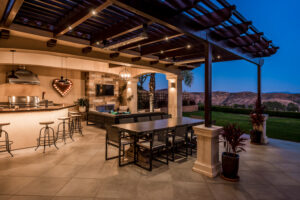
Laying pavers on curved paths can be challenging, but landscape professionals can plot out and perform the job.. Curving paths force people to slow down, which helps them notice and enjoy different areas of your backyard. This ranges from viewing a group of beautiful plants to admiring your outdoor kitchen, a sitting area or a koi pond.
Long, straight pavers
These types of pavers make a small backyard look bigger than it is. It’s the equivalent of placing overlarge furniture in a small room to make the room look more spacious. Long pavers also encourage the walker to move in a certain direction. Because of this, they are excellent choices when a backyard has a focal point such as a statue, fountain or fire pit.
Transitional areas
You might also wish to use different paver materials or patterns for transition areas. If a room opens directly onto your backyard, you might want to install pavers that are the same color as the floor of the adjacent room. This gently reminds people that your backyard is as much a part of your home as the indoor rooms, and you should enjoy it with the same gusto.
Your use of pavers can delineate one outdoor space from another. Brick pavers in a herringbone pattern can lead from the back door to the grassy area by the wall. This area can be separated from the seating area paved with bricks and concrete pavers by a line of pebbles. Stone steps may lead to the area that holds a fountain, which might stand in the center of concentric brick circles.
Pavers and turf
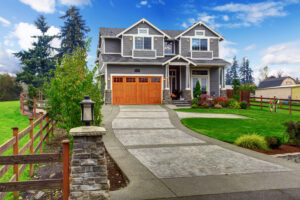
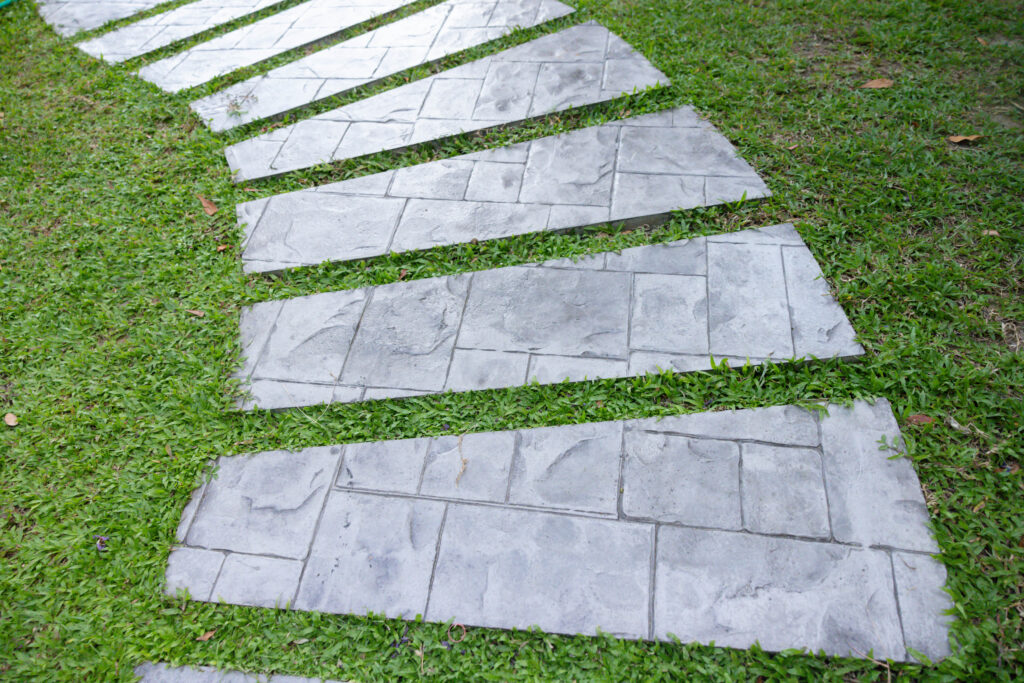
Another way to direct traffic in your backyard is to use large, stepping stone pavers with grass, moss or even alpine flowers between them. A line of pebbles can separate this area from the seating area, which is paved with bricks and concrete pavers.
Pavers beautify your backyard and help you and your guests move around easily. To learn more, visit our Marketplace to find a landscaping expert. Visit our page on Instagram for more home improvement inspiration.