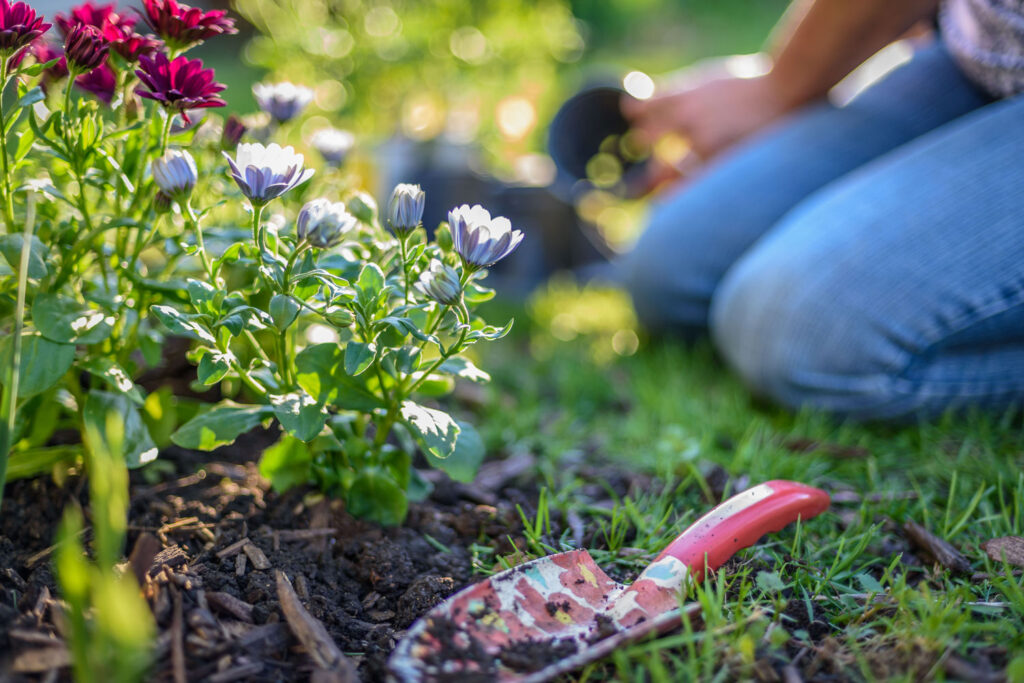
As spring approaches, yards and gardens need attention. Shrubs and trees are budding, and grass is beginning to sprout. But weeds are also sprouting, sometimes before anything else, and you might suddenly notice some winter damage you hadn’t noticed before. With all that in mind, here are some tips and tricks to ready your yard for spring.
Check your gardening and lawn tools
Before you do any work in your yard:
- Check your tools, from the smallest hand pruner to your riding mower.
- Clean all tools and make sure they’re free of debris.
- Sharpen tools that need to be sharpened, such as pruners, loppers, or lawnmower blades.
If you have a gas-powered lawn mower, check the spark plug and the air filter, and change the mower’s oil if necessary.
Gasoline should not be left in the tank over the winter, but if it has, run the mower until the gas is used up, then replenish it.
Rake up debris
Winter inevitably leaves some residue in your yard, and it will need to be removed before real work can begin. Use a springy leaf rake to gather up leaves, twigs, acorns, and anything else that’s fallen during the winter. After clearing everything, spread about a quarter of an inch of compost over the area.
Prune trees and shrubs
Winter inevitably breaks or kills some branches on your trees and shrubs. After your tools have been cleaned and sharpened, use them to prune. Some early-blooming shrubs should also be pruned right after they drop their blossoms. These include shrubs such as forsythias. Professionals such as those at G & G Landscape Solutions can help.
Mulch areas around trees and plants
Now is the time to lay 2 to 3 inches of mulch around trees, shrubs, and plants whose green tips are just emerging. Make sure not to let the mulch touch the crown of your plants, which can lead to rot. Mulch keeps the soil from freezing during unforeseen cold snaps and keeps it cooler if temperatures get unseasonably warm. Organic mulch also breaks down and adds nutrients to the soil, but nonorganic mulch, such as rubber, is better at keeping weeds down.
Check the pH of the soil
South Carolina is famous for its red, clayey soils, but that soil isn’t found everywhere. Finding out the type and pH of the soil in your yard is vital to planning what kind of plants, including what type of grass, to grow.
Consider the colors and textures of your future garden
Before you plant your garden, draw up a plan of perennials and annuals that are just right for the climate, your soil and the amount of sun an area of your yard gets. Gardening experts recommend planting in odd-numbered groups to make plants look less planned and more natural.
For more tips and tricks that let your yard welcome the spring, go to The HomeMag’s pages on Instagram and Facebook.